


18. April 1862. Directors of Statistical Office of the Republic of Serbia
Prince Mihailo Obrenović signed an act obliging the Economic Department of the Ministry of Finance to conduct and coordinate all statistical work
The beginning of the state statistical service in Serbia officially began on April 18, 1862, when Prince Mihailo Obrenović signed an act obliging the Economic Department of the Ministry of Finance to conduct and coordinate all statistical work for all branches of state administration. The Minister of Finance was Kosta Cukić, who formed the Department of Statistics in the Ministry.
Prof. Dr. Vladimir Jakšić (1824-1899) was the founder and head of the first Department of Statistics in Serbia.
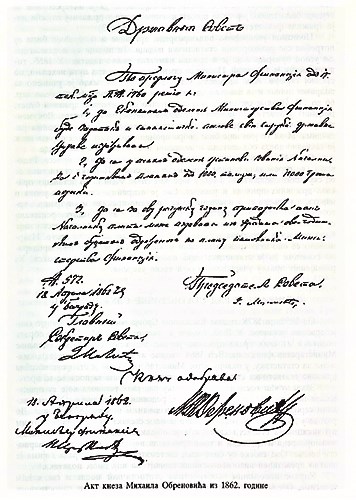
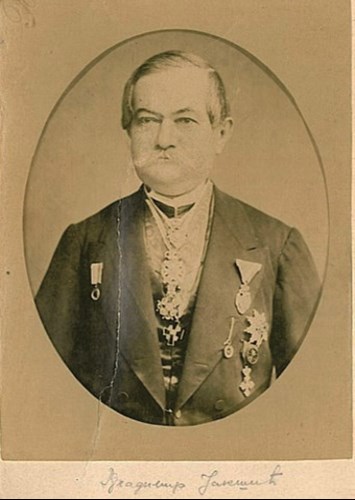
Source: Collection of Laws and Regulations, 15. http://digital.bms.rs/ebiblioteka/publications/view/4080
Prof. Dr. Vladimir Jakšić was a Serbian economist, statistician and meteorologist. He founded the first statistics department in Serbia and the first network of meteorological stations.
He completed high school in Belgrade, a commercial course in Vienna, and studied political science in Tübingen and Heidelberg. From 1847 he worked at the Ministry of Finance, where he collected statistical data on his own initiative. As early as 1850, he submitted a proposal to the State Council to create a state statistical service. In 1852, he was appointed professor of economic subjects at the Lyceum. Then, in 1862, he returned to the Ministry of Finance as head of the economic department, and in 1864, he became head of the newly established department of state statistics. He organized the department, but also established statistical work in Serbia. His most important work is the State Gazette of Serbia, whose publication began in 1863.
He was the first to start meteorological measurements in Belgrade and Serbia (1848) and the first to write about meteorology in Serbia, so he is considered the founder of Serbian meteorology and climatology. After only 3 years of meteorological measurements, in 1851 he conducted the first study of the climate of Belgrade, based on the results of his own measurements and observations for the period 1848–1850. He was the founder of the meteorological network of stations, so that, thanks to him, Serbia had as many as 27 meteorological stations in 1857, which at that time represented one of the densest meteorological networks within a single state. He retired in 1888, and his work in the field of statistics was continued by Bogoljub Jovanović. On 8 January 1850, he was elected a full member of the Serbian Literary Society in Belgrade.
He was awarded the Austro-Hungarian Order of Franz Joseph, the Order of the Romanian Crown, the Greek Order of the Savior, the Russian Order of St. Anne, the Order of St. Stanislav, the Serbian Royal Order of the White Eagle, and the Order of the Cross of Takov. He was a regular member of the Serbian Literary Society, the Serbian Learned Society, and an honorary member of the Serbian Royal Academy
The first State Gazetteer of Serbia was published
The most important publication issued by the official statistics of that time was the State Gazetteer of Serbia, whose publication began in 1863. 20 volumes were issued, the last one being published in 1894 (1863, 1865, 1869, 1870, 1871, 1872, 1873, 1874, 1879, 1880, 1882, 1883, 1884, 1889 - volumes 14, 15 and 16, 1890, 1892, 1893, 1894).
The State Gazette published statistical data on climatic conditions, human movement, population, prices, and turnover in domestic and foreign trade. Population census data (1863, 1866, 1874 and 1884) as well as livestock census data were also published. Reports from International Statistical Congresses were also published in the State Register.
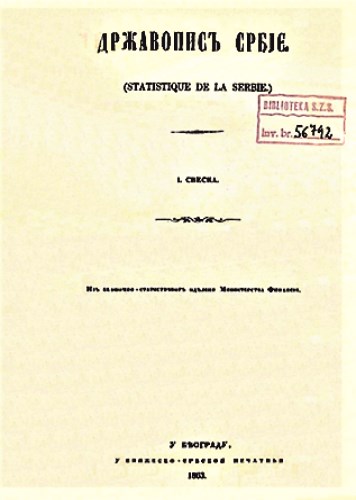
Source: Old and Rare Books https://www.stat.gov.rs/sr-cyrl/publikacije/?d=11&r=
A Population Census was conducted
For the purpose of establishing a new tax base under the tax law of 1861, the eighth Census for 1862 was prepared, but due to the conflict with the Turks and the bombardment of Belgrade, the census was postponed and conducted in 1863 "with the main task of listing immovable property and personal services, i.e. for the tax cadastre." The results of this census, the eighth in a row, were published in volume II of the State Register of Serbia.
At the fifth Statistical Congress in Berlin, held from 4 to 12 September 1863, Serbia had an official representative for the first time, Vladimir Jakšić, who orally reported on the state of administrative statistics in Serbia. An exchange of statistical data was agreed upon.
A separate statistical department was established at the Ministry of Finance
Statistical work also required a separate organization, so in 1864 a separate Statistical Department was separated from the Economic Department of the Ministry of Finance, thus making state statistics a separate service. The Statistical Department had three expert statisticians, and each ministry had one.
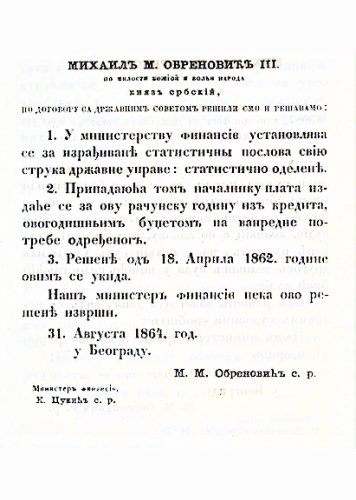
Collection of Laws and Regulations, 17: http://digital.bms.rs/ebiblioteka/publications/view/4082
The subject Statistics is taught as a compulsory subject at two (out of three) faculties of the University (at the Faculty of Philosophy and the Faculty of Law), based on the law of September 24, 1864, by which the Lyceum was transformed into the Great School. In practice, the study of statistics was not given much attention. Students considered it a secondary subject, there were no printed textbooks, and the lectures were mostly given by professors from other professions, albeit without much enthusiasm. No visible traces of those lectures remain. (Source: Lazo M. Kostić: Theoretical statistics, Publishing and book company Gece Kona a. d., Belgrade, 1937, p. 72)
Census
The ninth census was conducted in October 1866. The statistical department of the Ministry of Finance, under the leadership of Vladimir Jakšić, developed census forms and rules, and made serious preparations for the census. The census covered the entire population, including all Gypsies, both settled and unsettled. The questions about the population were expanded; in addition to gender and marital status, data on age, occupation, literacy, etc. were also recorded. However, for technical reasons, not all of this data could be processed. The census was conducted in all 17 districts at the same time as in the city of Belgrade. However, the census in Belgrade was not complete, so at the beginning of 1867, a re-counting of the population was carried out within one day. Thus, the results of the 1866 census were corrected.
The 1866 census can be considered the first modern Serbian census.
The results of this census were published in volume III of the State Register of Serbia, and data on occupations in volumes XII and XIII.
A livestock census (horses, cattle, pigs, sheep, goats) was carried out, and data on the number of beehives, carts, plows and plows was collected. The results of this census, including the calculation of the value of livestock, were published in the State Register of Serbia, Volume IV, in the work Census of Domestic Livestock of Serbia in the Year 1866.
A census of cultivated land (arable land) was carried out, which collected data on the areas under the following agricultural crops: wheat, rye, barley, corn, spelt, oats, buckwheat, millet, potatoes, cabbage, tobacco, flax and hemp. The area was given in the measures customary among the people: for fields in plowing days, for meadows in scythes and for vineyards in hoes. An estimate of the livestock for plowing (horses and oxen) was also carried out. Data on the number of mills and dryers, brandy cauldrons and mulberries was also collected. The results of this census were published in the State Register of Serbia, Volume V, in the work Census of Cultivated Land (Arable Land) of Serbia in the Year 1867.
From September 17 to 23, the sixth Statistical Congress was held in Florence. The official representative of Serbia was Vladimir Jakšić, who submitted a report in French on the state of official statistics in Serbia and on what of the earlier conclusions of the congress had already been adopted in Serbia. Jakšić presented the results of meteorological measurements in Serbia and contributed to the proposal for the exchange of meteorological data between countries, as well as the beginning of the idea of creating an International Meteorological Congress. The Italian King Victor Emmanuel awarded Vladimir Jakšić, as well as the other directors of national statistics present at the congress, with the Order of St. Maurice and Lazarus. (Source: Izvestije (report) on the sixth session of the statistical congress held in 1867 in Florence, Državopis Srbije, III. svezska, pp. 116-123 and Slobodan Plazinić: From the history of Serbian meteorology, AGM knjiga, Belgrade, 2012. p. 34).
From August 22 to September 2, the seventh Statistical Congress was held in The Hague. The official representative of Serbia was Vladimir Jakšić. (Source: Report on the Seventh Session of the Statistical Congress Held in the Year 1869 in The Hague, State Gazette of Serbia, Volume IV).
Census
The tenth census was carried out in December 1874, representing a new action of the statistical department with even more complete results compared to the census of 1866. Preparations for the census were more extensive, questions about the population were somewhat expanded, and the entire census action was carried out in a satisfactory manner.
Publication of Teaching Statistics
Statistics of teaching in the Principality of Serbia for the 1871-72 and 1872-73 school years were published in 1876. This publication was published by the Ministry of Education and Church Affairs until 1912, when data for the 1904-1905 school year were published.
Census in the liberated territories
The Statistical Department was preparing a census for the end of December 1880 in accordance with the recommendations of the Petrograd Statistical Congress of 1872. However, the war with Turkey in 1877 and 1878 and the political circumstances after the war hindered the implementation of the census. In the meantime, at the Berlin Congress of 1878, Serbia received recognition of its full political independence in an expanded territory with the districts of Niš, Pirot, Vranje and Toplička.
In order to determine the numerical status of the population in the liberated territories, the Government ordered a census in February 1879. The census lasted from February 22 to March 22. The census forms used on that occasion did not differ from those used in the 1874 census. The following data were collected in the census: number of houses and families, inhabitants by sex, marital status and religion, and "head tax" (per capita tax). The census was carried out by district commissions. The results of this census were published in volume 11 of the State Register of Serbia.
The Law on the Organization of Official Statistics was passed April 8, 1881
This law on official statistics provided for the establishment of the Office of Official Statistics under the Ministry of Finance. The Office has a Statistical Bureau and a Central Statistical Board of nine members. The Director of Official Statistics is the head of the Statistical Bureau and is also a member of the Central Statistical Board. One statistical officer will be appointed in each ministry, and each district will form a district statistical board. Responsibility for the accuracy of the data is determined. (Source: Serbian Newspapers, No. 84 of April 18, 1881, p. 533 and Collection of Laws and Regulations in the Principality of Serbia, issued from August 18, 1880 to June 26, 1881, No. 36, State Printing House, Belgrade, 1881, pp. 621-627).
Unfortunately, this law was not immediately or fully implemented. The Office of Official Statistics was not formed, but statistical matters remained under the jurisdiction of the Statistical Department. The Office of Official Statistics is not mentioned in the Calendar with Schematics of the Principality (later the Kingdom of Serbia), nor in official statistical publications (as a publisher) until the enactment of the Law on the Regulation of State Statistics in 1901. The Central Statistical Board was formed by the Decree of May 13, 1888, therefore only after the arrival of Bogoljub Jovanović as head of the statistical department.
In the Preface to the Statistical Yearbook N.R. Serbia for 1951, Miloš Macura, director of the Institute for Statistics and Records of the NRS, gives a brief review of the seventieth anniversary of the first law on statistics in Serbia and states the following assessment: "This law was passed after great efforts and significant results achieved by Serbian statistics, and was the legal basis on which it further developed. According to its concepts, the first Serbian law on statistics represented a progressive act for the circumstances of that time and at the same time a success for statisticians of that time. We should not lose sight of the fact that the political circumstances of that time were not particularly favorable for the development of scientific and research work on a broader basis. The history of the Serbian Literary Society, the Serbian Learned Society, the development of the Lyceum, the Great School and discussions about the University clearly show that at that time progressive ideas related to this type of activity were very difficult to affirm and realize. And that is precisely why to pay tribute to the statisticians of that time, and especially to Vladimir Jakšić and Bogoljub Jovanović, for all that they achieved in the field of statistics".
In November, Vladimir Jakšić became a member of the Statistical Society of Paris.
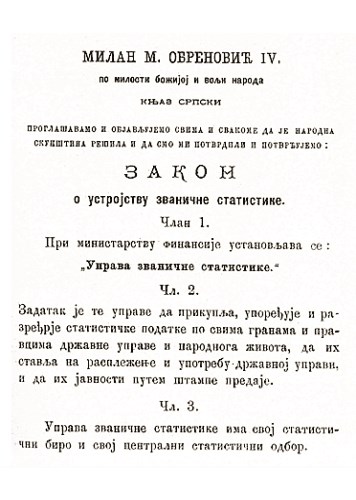
Ten months after the enactment of the Law on the Organization of Official Statistics, the Office of Official Statistics is still not mentioned in the documents of the Ministry of Finance. The National Assembly passed, and King Milan Obrenović confirmed on December 21, 1882, the Law on the Organization of the Ministry of National Economy; this law was published in the Serbian Gazette only on March 23, 1883. In April, as part of the reorganization of ministries, according to the Law on the Organization of the Ministry of National Economy (from December 1882) and the Ministry of Finance's decree from March, the Statistical Department moved from the Ministry of Finance to the newly established Ministry of National Economy,with Vladimir Jakšić as head. Jakšić headed this department until 1888, when he retired. He was replaced in that position by Boljoljub Jovanović, the reformer of Serbian statistics.
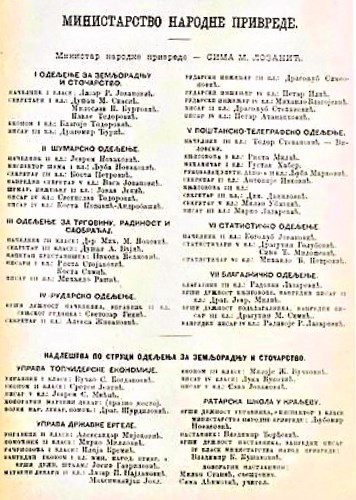
Source: State Calendar of the Kingdom of Serbia, 1898.
Census of Population and Property
The 1884 census was conducted based on the Law on the Census of Population and Property of July 14, 1884. Like previous censuses, it aimed to provide the necessary data for assessing taxes and only incidentally demographically important data.
The results of this census were published in volume 14 of the State Register of Serbia. Data were published on the number of homes and residents by municipalities and settlements within the borders of 1884. Data on the population were given by gender and marital status, literacy, ethnicity and religion, not by age and occupation.
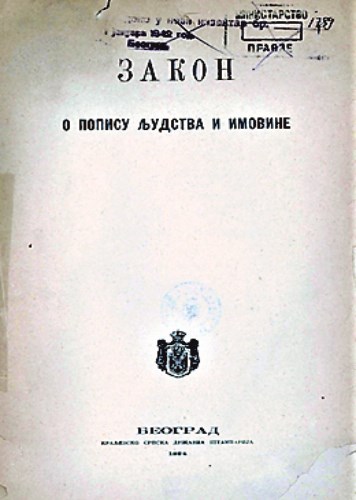
https://www.uzzpro.gov.rs/biblioteka-digit.html
The International Statistical Institute was founded, and Serbia was among the 23 countries from which members were proposed for the newly established institute.
Vladimir Jakšić was elected a member of the International Statistical Institute. (Source: Members of the International Statistical Institute, a cumulative list for the period 1885-2002, International Statistical Institute, Voorburg, 2003).
In December of the following year, Jakšić became a member of the Statistical Society of London (Collegium Oecumenicum rationariis gentium arte Statistica).
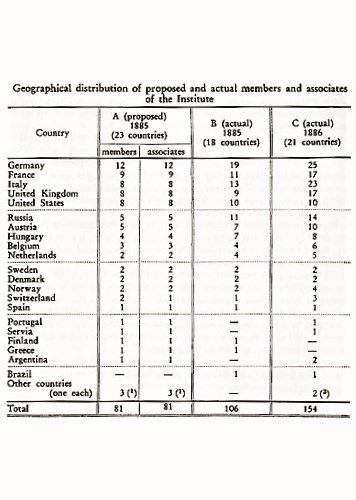
A History of the International Statistical Institute, 1885-1960, The Hague: International Statistical Institute.
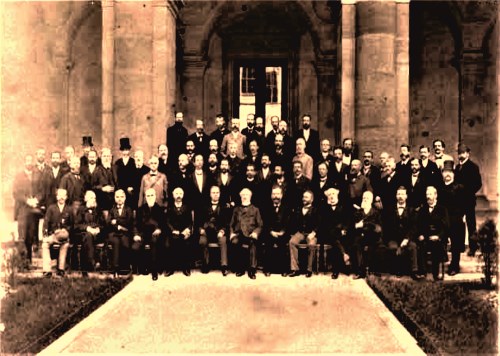
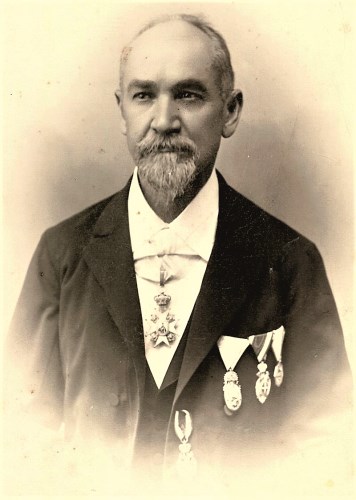
Dr. Bogoljub Jovanović becomes head of the statistical service.
Dr. Bogoljub Jovanović (1839–1924) was born on June 2, 1839 as Bohumil Snětivý in Bohdaneč (today's Lázně Bohdaneč, Czech Republic). He attended high school in Prague. With his parents and four sisters, he left Bohdaneč in 1852 and, after short stays in Bukovica near Slatina and Sentomaš (today's Srbobran), came to Belgrade in 1857. He was admitted to Serbian "sajiteľstvo" (citizenship) in 1870, and then received the name Bogoljub and the surname Jovanović, after his father's name Jan – Jovan.
|
At the end of 1866, he entered the service of the Belgrade Customs House, from where he was transferred to the Ministry of Finance, and at the end of 1868 to the statistical department. From then until his retirement in 1907, he remained in the service of state statistics without interruption, changing positions as the responsibility for statistics passed from one ministry to another, in 1888 he became head of the statistical department in the Ministry of National Economy, and in 1901 he became head of the newly established State Statistics Administration. He was a doctor of science, a connoisseur of foreign languages, and a man of great energy. He studied and translated the works of European economists and statisticians (von Scheel [German: Hans von Scheel], von Schmoller [German: Gustav von Schmoller], Block [French: Maurice Block]) and applied their modern thoughts and methods. As the head of state statistics, he was responsible for editing and publishing the State Register of Serbia, Statistics of the Kingdom of Serbia, Statistical Yearbook, as well as other official publications of state statistics. He participated in the formulation of a series of laws that established the system and methods of official statistics in Serbia in the late 19th and early 20th centuries. His leadership of state statistics has been characterized as a time of its flourishing. However, over time, Jovanović himself increasingly critically assessed the influence of empirical findings on political decision-making at the time in terms of social welfare. From a historical perspective, Jakšić and Jovanović's statistical work provides a detailed picture of society and conditions in the Principality and Kingdom of Serbia, and to this day serves historians as a reliable source. Among his statistical works, it is worth mentioning the conceptual contributions: Basis for Teaching Statistics, Basis of the Law on Regular Census of Population and Domestic Livestock, Basis on the Administration of State Statistics, etc. He was a member of the International Statistical Institute and published works in German as well. He was a correspondent for Czech and German newspapers, and a contributor to major German encyclopedias. His main and most famous work outside the field of statistics is “The Kingdom of Serbia and the Serbian People from the Roman Age to the Present” (German: “Das Königreich Serbien und das Serbenvolk von der Römerzeit bis zur Gegenwart”). The first volume was written by the Austrian Balkanologist Felix Kanitz with Jovanović's cooperation, the second volume was edited and published by Jovanović after Kanić's death based on his notes, and the third volume was written by Jovanović himself. He was admitted to the Serbian Learned Society as a full member of the Science Committee in 1879, and after the institution was closed down in 1892, he was transferred as an honorary member to its successor, the Serbian Royal Academy. He was awarded the Royal Order of Karađorđe's Star, the Royal Order of the White Eagle, the Royal Order of Saint Sava, the Order of the Cross of Takovo, and the Order of Miloš the Great. |
 |
Appointed members of the Central Statistical Board and the District Statistical Boards
By the decree of May 13, the following were appointed as members of the Central Statistical Board: Milan Đ. Milićević, librarian of the national library, Mladen Janković, general staff colonel, Pera Todorović, head of the first class of the department for trade, crafts and transport in the Ministry of National Economy, Milisav Milovanović, president of the second class of the Tax Administration, Svetozar Milojević, bookkeeper of the first class of the Ministry of Finance, Vladimir Karić, professor of the First Belgrade Gymnasium, Dr. Milan Jovanović, general practitioner and Milenko Žujović, secretary of the Ministry of Justice (Source: Srpske novine, issue 109 of 15 May 1888, p. 477). In accordance with the Law on the Organization of Official Statistics, Bogoljub Jovanović, Head of the Statistical Department, is also a member of the Central Statistical Board.
By the decree of King Milan I of July 24, members of the District Statistical Boards were appointed (Source: Decrees on the Appointment of Officials, Serbian Gazette, No. 162 of July 24, 1888, p. 725).
Postal and Telegraph Department of the Ministry of National
A census of cultivated land was carried out. The results of this census were published in the third book of the Statistics of the Kingdom of Serbia (Statistique du Royaume de Serbie), Census of Cultivated Land in the Kingdom of Serbia in 1889. (Source: Statistical Yearbook of the Kingdom of Serbia, second book, 1894-1895, Statistical Department of the Ministry of National Economy, Belgrade, 1898.)
General Law on the Census of Population and Livestock Adopted
The General Law on the Census of Population and Livestock of December 5, 1890, represents a major turning point in the development of Serbian statistics. It established the general principle according to which the population in Serbia is to be enumerated every five years, on December 31 of the census year. The census, by law, is conducted by municipal courts with the help of their enumerators, with the proviso that state and municipal officials, teachers of all schools, priests and other literate citizens were obliged to perform census work free of charge in their place of residence upon the invitation of the municipal court. When the enumerators complete the census, they submit the census material to the municipal court, which, after checking, either confirms it or orders its correction. The census material was submitted by the municipal courts to higher authorities, through which it was concentrated in the statistical department for processing. Only from this census is the permanent (resident) and present (actual) population recorded at the same time. This Law was strictly enforced until the First World War.
Population Census
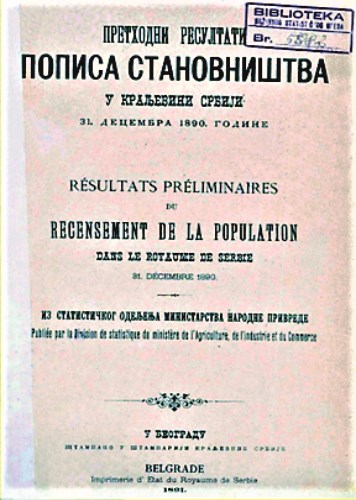
The census of December 31, 1890, is considered the first census conducted in accordance with modern statistical requirements. This census registered the permanent population by sex and place of birth, by age and marital status, by mother tongue and nationality, by religion, literacy and occupation. This data was published for every settlement in Serbia, except for data on occupation, which were given by district. In addition, data on the number of houses and families for each settlement are provided. The first results of the census were published in the book Preliminary Results of the Population Census in the Kingdom of Serbia, and the final data in five volumes in the book Statistics of the Kingdom of Serbia.
Preliminary results of the Population and Livestock Census in the Kingdom of Serbia were published
Preliminary results of the Population and Livestock Census in the Kingdom of Serbia, which was conducted in 1890, were published in 1891. A total of 5 books were published in this edition, and they related to the preliminary census results from 1890, 1895, 1900, 1905 and 1910.
The first serial publication of Foreign Trade Statistics of the Kingdom of Serbia was published
The publication entitled Comparative Review of Foreign Trade of the Kingdom of Serbia from 1879 to 1890 and Customs Revenue from 1881 to 1890 was published in 1891. From 1896 to 1901, this publication was published every year, and then in 1904, 1910 and 1914.
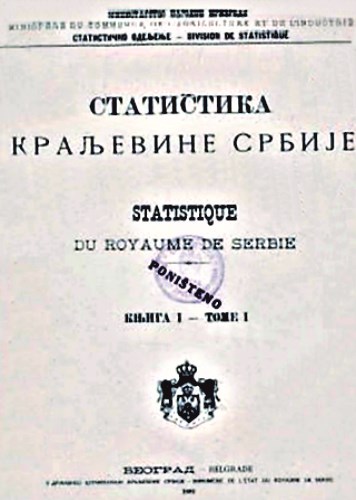
The Statistics of the Kingdom of Serbia Edition is published for the first time
A total of 32 books were published. The last, 32nd book, was published in 1913. 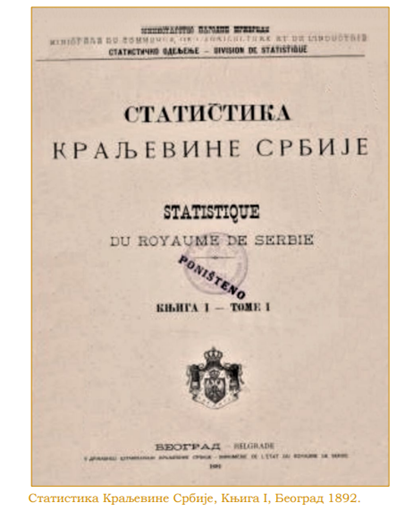 This series included statistical data from the field of population censuses, birth, marriage and death statistics, municipal revenues, criminal and civil trial statistics, education statistics, a census of cultivated land, a census of domestic livestock, agricultural and harvest yield statistics and data on income and expenditure of the Kingdom of Serbia.
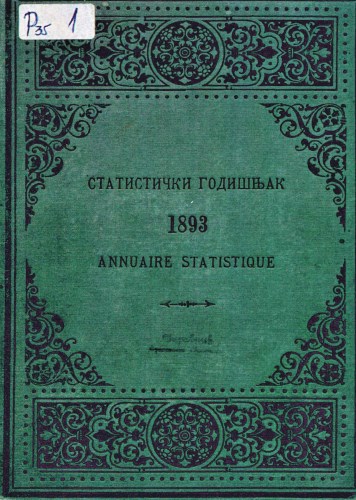
The First Statistical Yearbook of the Kingdom of Serbia was published
The yearbook contained data from 1893. A total of 13 books were published within this edition, and the last Statistical Yearbook of the Kingdom of Serbia was published in 1914 with data relating to 1909 and 1910.
The first volume of the Priloga za statistiku Kraljevine Srbije (Matériaux pour la Statistique du Royaume de Serbie), Church and monastery property in the Kingdom of Serbia at the end of 1888, published by the Statistical Department of the Ministry of National Economy, has been published. The Preface, signed by Bogoljub Jovanović, head of the statistical department, states that the Central Statistical Board decided to print smaller-scale statistical materials in a separate publication entitled Contributions to the Statistics of the Kingdom of Serbia.
The Census of Population and Livestock in the Kingdom of Serbia was carried out on December 31, 1895. It was the second regular census under the Law on the Census of Population and Livestock of December 5, 1890. Rules and Instructions for the Conduct of the Census of Population and Livestock of October 4, 1895. were published in the Serbian Gazette, the official journal of the Kingdom of Serbia, No. 228 of 10 October 1895. The preliminary and final results of the population census were published. The final results of the population census were published in Book XII of the Statistics of the Kingdom of Serbia, Population Census in the Kingdom of Serbia on 31 December 1895, published by the Statistical Department of the Ministry of National Economy, Belgrade, 1898. The results of the livestock census were published in Book XI of the Statistics of the Kingdom of Serbia, Population Census in the Kingdom of Serbia on 31 December 1895, published by the Statistical Department of the Ministry of National Economy, Belgrade, 1898.
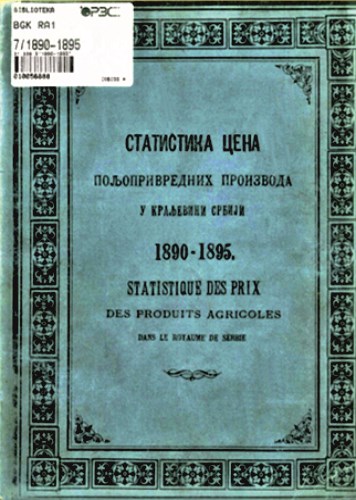
The publication "Statistics of agricultural product prices in the Kingdom of Serbia" was published
for the period from 1890 to 1895 in 1897.
Statistics of agricultural product prices in the Kingdom of Serbia from 1896 to 1900,
Statistics of agricultural product prices in the Kingdom of Serbia from 1901 to 1905 in 1906.
State Statistics Administration Established
Through the efforts of Bogoljub Jovanović, on January 15, 1901, a law was passed that ensured the independence of the statistical service and established the State Statistics Administration with its central statistical board.
The State Statistics Directorate was founded in scope of the Ministry of Social Policy of the
Kingdom of Serbs, Croats and Slovenes.
Population Census
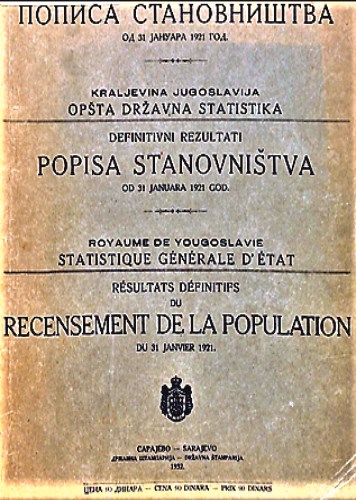
After World War I, the first census was conducted on January 31, 1921, although the borders of the Kingdom of Serbs, Croats and Slovenes had not yet been definitively established. The 1921 census was conducted like the 1910 Census on the principle of "present population" and did not include national declaration, so the mother tongue was the basis for determining ethnicity.
Preliminary results of this census were published in 1924, and the final ones were published only in 1932.
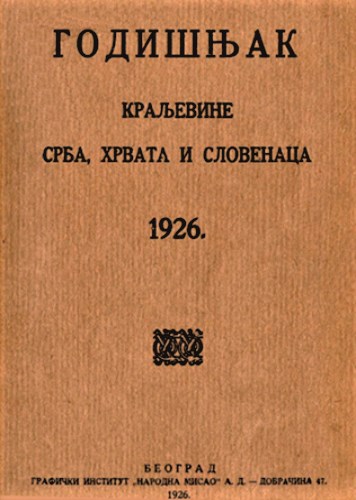
Statistical Yearbook of the Kingdom of Serbs, Croats and Slovenes
A total of ten books were published, the last tenth being published in 1941.
Population Census
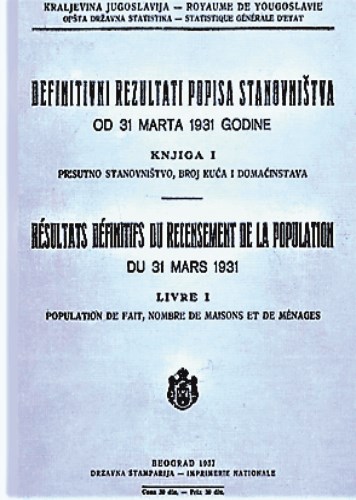
The second population census in the Kingdom of Yugoslavia was organized in the period from 1 to 20 April 1931. In this census, in addition to the native language and religion, a question was asked about the nationality of the respondents. Under the question about nationality, members of all South Slavic peoples were recorded as one entity, that is, as one nationality – “Yugoslav”. If a person was not of the “Yugoslav” nationality, the exact affiliation to a particular nationality was recorded.
The final results of the Population Census of January 31, 1931 were published in four books, the first in 1937, and the last, the fourth, in 1940.
The first book published data on the current population, the number of houses and households, the second published data on the current population by religion, the third published data on the current population by literacy and age, and the fourth published data on the current population by main occupation.
These publications were edited by the then head of State statistics, Dr. Rudolf Andrejka (1880-1948), who also edited the last five editions of the Statistical Yearbook.
February 26, 1945.
established Serbian National Statistics - the forerunner of today's Republic Statistical Office
(Official Gazette of the People's Republic of Serbia No. 4/45)
Statistical Office of the People's Republic of Serbia
The Law on General State Economic Planning and State Planning Bodies is adopted, according to which the Serbian National Statistics Office became the Statistical Office of the People's Republic of Serbia
The Statistical Office of the People's Republic of Serbia and the Statistical Offices of the People's Councils Become Bodies of the Federal Statistical Office
According to the Decree on the Establishment and Operation of the Federal Statistical Office and Statistical Offices in the People's Republics, the Statistical Office of the People's Councils and the Statistical Offices of the People's Councils became bodies of the Federal Statistical Office. The Statistical Office of the People's Councils was directly subordinate to the Federal Statistical Office, and was responsible to the Government of the People's Councils. The Statistical Offices of the People's Councils were under the direct leadership of the Statistical Office of the People's Councils.
The First Post-War Population Census Was Conducted
Due to the need to collect data on the damage caused by the war devastation as quickly as possible, in 1948 the so-called "shortened" list.
Statistical Yearbook Published
In December 1950, the Statistical Yearbook was published in 50 copies. It was published until 1954, and then its publication resumed in 1974.
With the change in the social order, this edition also changed titles:
1950–1954 under the title "Statistical Yearbook of the People's Republic of Serbia"
1974–1990 under the title "Statistical Yearbook of the Republic of Serbia"
1991–2010 under the title "Statistical Yearbook of Serbia"
since 2011 it has been published under the title "Statistical Yearbook of the Republic of Serbia"
Statistics and Records Office of the People's Republic of Serbia
The Statistical Office of the People's Republic of Serbia also incorporated records as a separate type of activity, i.e. the Statistical Office of the People's Republic of Serbia evolved into the Statistics and Records Office of the People's Republic of Serbia
The Announcement edition launched
The Announcement edition was launched with the intention of making the basic results of statistical research available to the media and other users as soon as possible. During one year, an average of about 350 issues of this edition are published.
The Monthly Statistical Review serial publication has been launched
The edition includes data series with monthly and quarterly periodicity. Data for the current year are most often preliminary results and are subject to corrections. In addition to data from the Republic Statistical Office, data from the National Employment Service on unemployed persons and the National Bank of Serbia on monetary assets are also published.
The edition has been published since:
1952–2009 under the title Monthly Statistical Review
2010– under the title Monthly Statistical Bulletin
Population Census
The 1953 Population Census was conducted by the Federal Office for Statistics and Records of the FPRJ on March 31, 1953. The census form contained 25 questions for each person and a Household List with instructions for filling it out.
Bulletin edition launched
The first issue of the Bulletin edition was printed in 1955 and is one of the oldest publications of the SSO. Bulletins are dedicated to the results of a single survey or statistical area. With the development of the website and database, the publication of statistical research results in this edition is gradually being discontinued.
The first issue of the Reviews edition was published
This series publishes original works by statisticians with comments and extensive statistical analysis.
This edition has been published since 1955 and has changed its name several times:
1955-1957 Reviews
1957-1963 Reviews and Studies
Since 1978, it has been published under the title Studies and Analyses.
Statistical Office of the People's Republic of Serbia
The Law on Administrative Bodies in the People's Republic of Serbia (Official Gazette of the People's Republic of Serbia No. 21/56) was adopted. According to this Law, the Statistical Office of the People's Republic of Serbia became the Statistical Office of the People's Republic of Serbia, which practically meant the definitive liberation of statistics from record-keeping tasks.
Office of the People's Republic of Serbia was adopted
(Official Gazette of the Republic of Serbia No. 13/58 of 29.03.1958), which somewhat more precisely determined the competence, tasks and organization of the Statistical Office of the People's Republic of Serbia.
A new period in the development of the statistical service and its organization began with the abolition of districts, which took place in stages throughout the territory of the Republic from 1958 to 1967. On the territory of the Republic itself, 9 regional statistical offices were formed in developed centers. In the SAP Kosovo, municipal statistical bodies were formed (mainly in the headquarters of the former districts), and in the SAP Vojvodina, the former district statistical offices became field departments of the Provincial Statistical Office.
Agricultural Census
The goal of the 1960 Agricultural Census was to collect data for a comprehensive overview of agricultural holdings, their mutual relationships, structure and distribution.
The results of this census were published in two books:
Book I - Basic data on individual holdings by settlement, published in 1963 by the Federal Statistical Office
Book II - Final results of the 1960 census of social and individual agricultural holdings, published in 1967 by the Federal Statistical Office.
Population Census
The 1961 Population Census was conducted by the Federal Statistical Office of the FPRJ on March 31, 1961. The census form contained 21 questions for each person, a Household List and a Questionnaire for an Apartment with instructions for filling it out. It represents the first census conducted at the beginning of the decade, and after it, regular censuses were conducted every ten years.
Municipal Statistical Documentation Edition Launched
This edition publishes the results of statistical research that are of interest to municipal assembly bodies and other users who monitor the economic and social development of municipalities. As a rule, one volume contains data from one area, and the number of features is significantly greater than that published in the Municipalities in Serbia edition. This edition ceased publication in 2002.
The first issue of the Working Document edition has been published
This serial publication was created with the aim of introducing users to the issues of statistical research, the quality of statistical material, trial calculations based on new methodologies, as well as other issues in the field of methodology and organization of research. It contains theoretical, methodological and analytical works.
Population Census
The 1971 Population Census was organized and conducted by the Federal Statistical Office of the SFRY on March 31, 1971. The census form contained 21 questions for each person, a Household List and a Questionnaire for an Apartment with instructions for completing it. This census is the fourth post-war census.
Publication of Municipalities in Serbia
The publication was created in 1974, in recognition of the needs of users for a comprehensive insight into the state and development of individual municipalities. In terms of content, scope and presentation, this edition represents a statistical yearbook for municipalities. In addition to data from the Republic Statistical Office, this publication also contains certain data from individual producers of official statistics, such as the Ministry of Internal Affairs, the Ministry of Finance, the Republic Geodetic Authority, the National Employment Service and the Institute of Public Health of Serbia.
The edition was published from 1974 to 2010 under the title "Municipalities in Serbia", and since 2011 under the title "Municipalities and Regions in the Republic of Serbia".
Published edition of the Intermunicipal Regional Community
This edition arose from the need to publish a publication that provides a picture of the size and development of the intermunicipal regional communities that were formed in 1975. The edition is rich in data thanks to which regions can be easily compared with each other as well as their individual comparison with the Republic. In order to meet the special needs of users, the regional departments of the Social Insurance Institution, located in the headquarters of the intermunicipal regional communities, among other things, from 1978 to 1988 published complex collections of data on their regions.
The edition ceased in 1991.
Population, Households and Dwellings Census
The 1981 Population Census was conducted from April 1 to 15. This census was the largest statistical survey in terms of the number of units enumerated in statistical practice to that time, because in addition to the population and households, it also included all dwellings.
The first EARN node (European Academic Research Network) for our country, was established at the Statistical Office of RS in 1987 and it was named and refered to as YUBGSS21.
Even in those days EARN was connected to the international computer network, i.e. the internet presently.
Census of Population, Households, Dwellings and Agricultural Holdings
This is the last census in a series of censuses conducted every 10 years (1961, 1971, 1981, 1991) according to international recommendations that a census be held every ten years, in a year ending with zero, i.e. the year before or after that year.
Due to the boycott of the census by the Albanian population, the census was not conducted in the territory of the Autonomous Province of Kosovo and Metohija with a majority Albanian population and in the municipalities of Bujanovac and Preševo. For this reason, an official population estimate was made for the area.
The census results were published in 24 books.
Decree on the manner of performing the work of ministries and special organizations adopted
The organization of statistics in the Federal Republic of Yugoslavia, which was established in 1992 by Serbia and Montenegro, remained the same. Federal, Republic, provincial institutes and local departments continued to operate and had the same tasks and the same rights as before. On 29 January 1992, the Government of the Republic of Serbia adopted the Decree on the manner of performing the work of ministries and special organizations outside their headquarters, which grouped the municipalities in the Republic of Serbia into 29 districts and the City of Belgrade. The Statistical Service in Central Serbia carried out its activities within its scope of work through 9 regional departments in the former regional headquarters (Valjevo, Zaječar, Kragujevac, Kraljevo, Leskovac, Niš, Smederevo, Užice and Šabac). Since 1992, the Statistics Sector has been operating in the territory of the Autonomous Province of Vojvodina with 5 regional departments (Zrenjanin, Novi Sad, Pančevo, Sremska Mitrovica and Subotica). In the same year, the Statistics Sector of the Autonomous Province of Kosovo and Metohija was formed, which it was part of until June 1999.
Census of Population, Households and Dwellings
In accordance with international recommendations on the periodicity of censuses, it was planned that the first census in the 21st century would be conducted in April 2001. However, a decision was made in Serbia to postpone the census for a year. The census was conducted from 1 to 15 April 2002, but only in the territory of central Serbia and the Autonomous Province of Vojvodina. The census was not conducted in the territory of the Autonomous Province of Kosovo and Metohija because the conditions for it did not exist. This census also included questions about agriculture.
Based on the collected data on the basic enumeration units (persons, households and dwellings), data on agricultural holdings, families and buildings were also processed.
The first press conference was held, at which the results of the Census were announced.
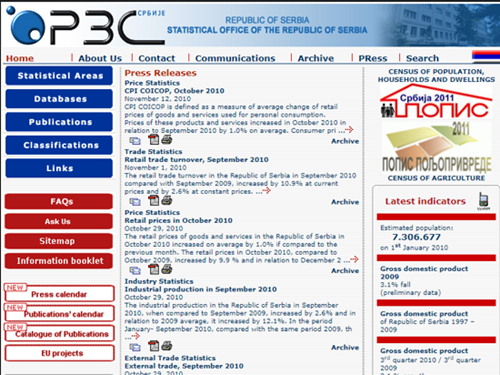
The first website of the Statistical Office of the Republic of Serbia was launched
The Statistical Office of the Republic of Serbia became the successor of the Statistical Office of Serbia and Montenegro
In May 2006, Serbia and Montenegro became independent republics. In accordance with Article 60 of the Constitutional Charter of the State Union (Official Gazette No. 1/2003), the Republic of Serbia became the successor of the State Union of Serbia and Montenegro. Based on the Decision on the obligations of state bodies of the Republic of Serbia in exercising the competences of the Republic of Serbia as the successor of the State Union of Serbia and Montenegro (Official Gazette No. 48/2006 of 5.06.2006) and in accordance with the Regulation on the financing of competences transferred to the Republic of Serbia from the former State Union, the Republic Statistical Office became the successor of the Statistical Office of Serbia and Montenegro.
The Law on Official Statistics adopted (Official Gazette of RS No. 104/2009).
By adopting this law, the Law on Statistical Surveys (Official Gazette of RS 83/92, 53/93, 67/93, 48/94 and 101/05) and the Law on the System of Statistical Surveys (Official Gazette of FRY 80 / 94 and 28/96) ceased to apply.
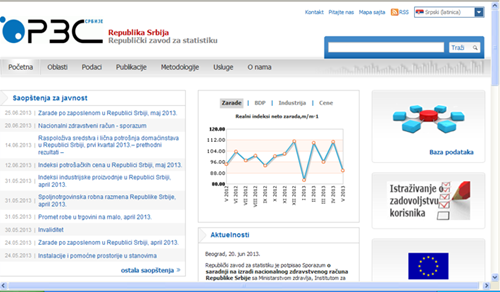
New website launched
First dissemination database developed

Census of Population, Households and Dwellings
The census was conducted from 1 to 15 October 2011. The census covered citizens of the Republic of Serbia, foreign citizens and stateless persons residing in the Republic of Serbia, regardless of whether they were in the Republic of Serbia or abroad at the time of the census. The census also includes citizens of the Republic of Serbia, foreign citizens and stateless persons residing abroad, who have been residing in the Republic of Serbia for at least a year at the time of the census.
The results of the census have been published in 30 books and 13 demographic studies.
Developed ICT system
The Statistical Office of the Republic of Serbia is one of the few statistical institutions in the world that has a completely independently developed operational, production, meta data driven system of the latest technology, which serves for entry, processing, statistical analysis and publication statistical data.
Opened Twitter account (@StatistikaSrb)
Agricultural Census
The 2012 Agricultural Census was conducted based on the Law on the Agricultural Census of 2011 ("Official Gazette of the Republic of Serbia", No. 104/09 and 24/11).
The 2012 Agricultural Census was conducted within the framework of the World Agricultural Census 2010 Programme.
The results of the Agricultural Census were published in the books:
- Agriculture in the Republic of Serbia, Book I
- Agriculture in Republic of Serbia, Book II, as well as in eight special studies.
The first peer review of the level of implementation of the European Statistics Code of Practice in the national statistics.
The third website
Redesigned dissemination database.
Open Data Portal launched
By opening up datasets to the public, the SSO wants to encourage the implementation of the Strategy for the Development of e-Government and other national and international policies. The Open Data Portal provides access to datasets that can be used and reused for commercial or non-commercial purposes for free.
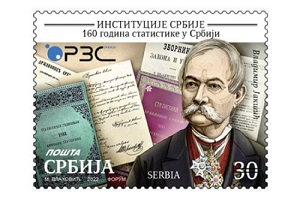
Postage stamp dedicated to the jubilee - 160th anniversary of official statistics in Serbia
The public enterprise "Post of Serbia" has included in the Program of issuing commemorative postage stamps for 2022 the commemorative session "Institutions of Serbia", within which a commemorative stamp (with the image of PhD Vladimir Jaksic, Serbian economist, founder of the first department for Statistics in Serbia) was dedicated to the jubilee - the 160th anniversary of official statistics in Serbia.
The Census of Population, Households and Dwellings was conducted in the period from 1 to 31 October 2022.

2023 Census of Agriculture was carried out in the period from June 1 to December 15, 2023.

The National Assembly of the Republic of Serbia adopted the new Law on Official Statistics оn December 3, 2025.